


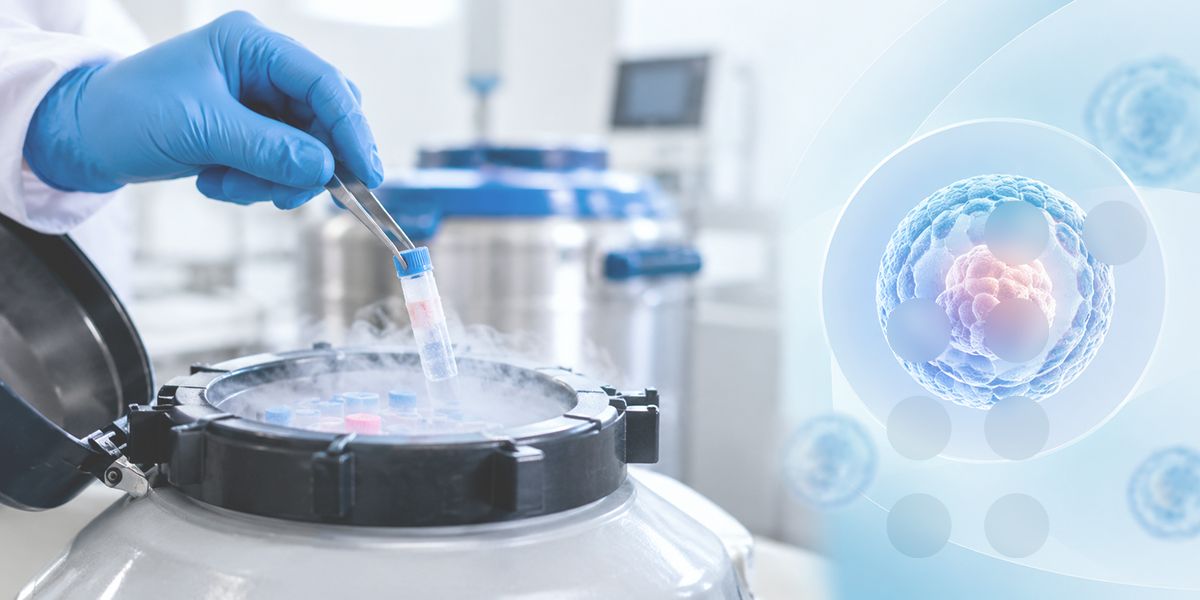

Does Long-Term Embryo Cryostorage Affect Embryo Competence and Pregnancy Outcomes?
Embryo cryopreservation has become an integral part of modern assisted reproductive technology (ART). With the widespread adoption of vitrification, embryos can be stored for extended periods and subsequently warmed for frozen embryo transfer (FET). This has made it possible to postpone embryo transfer for medical, reproductive, or personal reasons without necessarily requiring another ovarian stimulation cycle.
But an important clinical question remains: does the length of time an embryo spends in cryostorage affect its biological competence, its ability to survive warming, or the probability of achieving a pregnancy and live birth?
The short answer is: current evidence does not support the idea that an embryo simply “ages” while properly cryostored, but some observational studies have reported lower reproductive outcomes with longer storage. The evidence is inconsistent, and the apparent effect of storage duration may be influenced by patient age, embryo quality, treatment strategy, cryopreservation technology, and other clinical factors.
For fertility clinics, the practical focus should therefore be on maintaining stable cryogenic conditions, minimizing unnecessary temperature fluctuations and handling, using validated vitrification and warming protocols, and maintaining rigorous cryostorage quality control.
What happens to an embryo during cryostorage?
Modern embryo vitrification is designed to transform the embryo into a glass-like, non-crystalline state through extremely rapid cooling in the presence of cryoprotective solutions. This approach minimizes the formation of intracellular ice crystals, which can damage cellular structures.
After vitrification, embryos are stored at cryogenic temperatures, commonly in liquid nitrogen at approximately −196°C. At these temperatures, biological activity is effectively suspended. The embryo is not metabolically active in the way it would be at physiological temperatures.
This distinction is important.
Cryostorage is not equivalent to biological aging.
The embryo does not continue normal cellular metabolism while maintained correctly in cryogenic conditions. Consequently, the theoretical expectation is that an embryo should remain biologically stable during storage, provided that the vitrification process, cryodevice, storage environment, and warming procedure are appropriately controlled.
ASRM guidance emphasizes that cryopreserved reproductive tissues must be maintained under stringent conditions, with appropriate liquid-nitrogen monitoring, alarms, emergency procedures, and documented quality-control processes.
Does longer storage reduce embryo survival after warming?
This is one of the most important practical questions for embryology laboratories.
The answer from published studies is mixed.
Several large studies have found no clinically important relationship between storage duration and embryo survival. For example, a study involving 58,001 vitrified blastocysts found no significant association between storage time and embryo survival, and multivariable analysis did not demonstrate an association between storage duration and live birth rate. Other variables, including embryo quality, maternal age, BMI, uterine factors and treatment characteristics, were more closely associated with reproductive outcomes.
Similarly, a systematic review and meta-analysis published in 2022 evaluated 18,047 embryos and found no significant difference in survival, miscarriage, live birth, or major malformation rates between embryos stored for more than 12 months and those stored for shorter periods.
However, more recent evidence has introduced an important qualification.
A 2026 systematic review and meta-analysis involving 23 studies and 254,017 embryo-transfer cycles reported a modest reduction in embryo survival among embryos stored for more than five years. The same analysis reported lower clinical pregnancy and live birth rates with increasing storage duration, particularly when storage exceeded several months. However, the authors also found that outcomes appeared to plateau after approximately two years rather than continuously deteriorating with additional storage time.
Importantly, the authors highlighted substantial heterogeneity between studies and the inability to completely account for maternal age, embryo quality, treatment type and other confounding variables. Therefore, these findings should not be interpreted as proof that cryostorage itself causes progressive embryo damage.
What does the evidence say about pregnancy and live birth?
This is where the literature becomes particularly interesting.
Older and more recent studies have produced apparently contradictory results.
A large historical analysis of 11,768 cryopreserved human embryos found no significant effect of storage duration on post-thaw survival, implantation, clinical pregnancy, miscarriage, or live birth. The strongest predictors of pregnancy outcome were factors such as oocyte age, embryo survival and the number of embryos transferred.
Other studies have similarly reported that long-term cryostorage does not significantly affect pregnancy or neonatal outcomes.
For example, a study of 8,736 single vitrified-warmed blastocyst transfer cycles compared embryos stored for up to approximately eight years with embryos stored for shorter periods. Live birth rates were not significantly different between storage-duration groups, and no significant differences were observed in birth weight or congenital malformation rates.
A 2023 study of 1,037 women also found no significant differences in biochemical pregnancy, implantation, clinical pregnancy, ongoing pregnancy or live birth among embryos stored for up to seven years. Neonatal outcomes were likewise not significantly different.
Another study involving embryos stored for more than six years found no significant differences in positive hCG, clinical pregnancy, miscarriage, live birth, or neonatal outcomes compared with matched embryos stored for much shorter periods.
These findings support the concept that properly performed vitrification followed by stable cryostorage can preserve embryo competence for many years.
Why, then, do some studies report worse outcomes after long storage?
There are several possible explanations.
First, storage duration is not randomly assigned.
An embryo that remains frozen for five or seven years is fundamentally different, from a clinical-history perspective, from an embryo transferred three months after vitrification. The patient may have become older, treatment strategies may have changed, and the reason for delaying transfer may itself be associated with reproductive prognosis.
Second, embryo quality can vary considerably.
Embryos with different morphological grades, developmental stages, genetic status and cryosurvival characteristics may have different probabilities of producing a live birth. If embryo quality is not adequately controlled for, an apparent association between storage duration and pregnancy outcome may actually reflect differences in embryo selection.
Third, the age of the oocyte is highly relevant.
The genetic and developmental competence of an embryo is largely established before cryopreservation. In particular, maternal age at oocyte retrieval is a major determinant of embryo aneuploidy and reproductive potential. Therefore, the age of the woman when the oocyte was collected may be substantially more important than how long the resulting embryo remained cryopreserved.
Fourth, laboratory technology has changed over time.
An embryo stored for several years may have been vitrified using an older protocol or device, whereas a recently frozen embryo may have benefited from newer vitrification media, devices, laboratory procedures and quality-control systems.
For this reason, comparing embryos solely according to storage duration can oversimplify the biology and clinical context.
What does the newest evidence show?
The most comprehensive recent evidence comes from a 2026 systematic review and meta-analysis published in Human Reproduction Open.
The analysis included 23 studies representing 254,017 embryo-transfer cycles or patients. Compared with embryos stored for three months or less, longer storage was associated with lower odds of clinical pregnancy and live birth. The association became more pronounced in some analyses after six and twelve months.
However, the authors identified a non-linear pattern: reproductive outcomes appeared to decline during the earlier storage intervals and then plateau after approximately two years. They also emphasized that the included studies were predominantly observational and had important differences in embryo stage, cryopreservation methods, patient populations and adjustment for confounding variables.
This is an important distinction.
The findings suggest an association between storage duration and some reproductive outcomes; they do not demonstrate that keeping an embryo in liquid nitrogen for a particular number of months or years directly causes loss of developmental competence.
In other words, the current literature does not justify a simple clinical rule such as:
“Embryos must be transferred within one year or their quality will deteriorate.”
The evidence is more nuanced than that.
Does long-term cryostorage affect neonatal outcomes?
Available evidence is generally reassuring.
Several studies have reported no meaningful increase in congenital malformations or adverse neonatal outcomes associated with prolonged embryo storage.
The 2022 systematic review and meta-analysis found no significant difference in major malformation rates between embryos stored for more than 12 months and those stored for shorter periods.
Similarly, studies examining storage periods extending several years have generally not demonstrated clinically significant differences in birth weight, neonatal length, gestational outcomes, or congenital anomalies.
The 2026 meta-analysis reported an association between storage longer than 12 months and miscarriage and preterm birth, but did not find a significant increase in malformation rates. The authors stressed that neonatal analyses were limited by heterogeneity and residual confounding.
Therefore, it would be inappropriate to conclude that long-term cryostorage is inherently unsafe for the resulting pregnancy or newborn based solely on current observational data.
The cryostorage system matters
From a laboratory perspective, the question should not simply be:
“How long has this embryo been frozen?”
A more useful question is:
“Has the embryo remained continuously within validated cryogenic conditions throughout storage?”
Cryostorage systems must maintain stable temperatures and provide protection against catastrophic temperature increases.
ASRM guidance recommends documented procedures for liquid-nitrogen management, regular monitoring or continuous alarm systems, adequate emergency supplies, appropriate inspection of tanks and staff training.
The latest ESHRE laboratory recommendations likewise emphasize continuous monitoring of cryostorage tanks, alarm systems, backup storage capacity, appropriate preventive maintenance, tank-integrity assessment and documented temperature control. The recommendations state that cryopreserved material should not be exposed to temperatures above −140°C during storage and transport.
This is particularly relevant because the major practical threat to a cryopreserved embryo is not the passage of calendar time itself. It is failure of the cryogenic chain or damage during handling, warming, transport, or other critical laboratory steps.
Vitrification and warming are critical points
Long-term embryo preservation begins with a successful vitrification procedure.
The quality of vitrification determines how well the embryo tolerates subsequent warming. Vitrification requires carefully controlled exposure to cryoprotectants, appropriate cooling rates, small sample volumes and validated cryodevices.
ASRM describes rapid cooling at rates typically exceeding −2,500°C/min and emphasizes appropriate cryoprotectant selection, validated devices, operator training and quality-control procedures. Current vitrification systems can achieve very high embryo survival rates when appropriately implemented.
Warming is equally important.
An embryo that has remained stable for years can still be compromised by an inadequate warming procedure. Consequently, laboratory performance should be assessed using measurable key performance indicators such as:
- Post-warming survival rate
- Blastocyst re-expansion
- Embryo utilization rate
- Implantation rate
- Clinical pregnancy rate
- Ongoing pregnancy rate
- Live birth rate
Monitoring these parameters over time provides a much more useful assessment of cryopreservation performance than storage duration alone.
Practical implications for IVF laboratories
For embryology laboratories managing long-term embryo cryostorage, several measures are particularly important.
-
Maintain validated cryogenic conditions
Storage tanks should be routinely monitored for liquid-nitrogen levels and temperature-related abnormalities. Automated alarms and remote notification systems can provide additional protection against equipment failure.
-
Minimize temperature excursions
Repeated exposure of cryopreserved material to temperatures outside validated limits should be avoided. Tank organization should allow rapid retrieval while minimizing unnecessary exposure and handling.
-
Maintain complete traceability
Each cryodevice should have clear and durable identification. The laboratory should maintain records of the embryo's developmental stage, embryo quality, vitrification date, cryodevice, storage location, warming procedure and post-warming outcome.
ESHRE specifically recommends documentation of the cryopreservation method, date and time, operator, embryo quality and developmental stage, number of embryos per device, storage location and unique identification codes.
-
Use validated vitrification and warming protocols
The objective is not simply to achieve freezing. It is to achieve reproducible embryo survival and utilization following warming.
Laboratories should establish standard operating procedures and monitor performance using internal quality indicators.
-
Have contingency plans
Cryostorage is a critical laboratory function. A robust program should have emergency procedures for:
- Liquid-nitrogen supply interruption
- Cryotank failure
- Alarm failure
- Facility power or monitoring failure
- Unexpected temperature increase
- Natural disasters or facility emergencies
- Transport between facilities
Backup storage capacity is an important component of risk management. ESHRE recommendations specifically identify the availability of at least one backup cryostorage tank as a good-practice measure.
-
Evaluate the whole clinical picture
When deciding whether to transfer a long-stored embryo, storage duration should not be considered in isolation.
Clinicians and embryologists should consider:
- Maternal age at oocyte retrieval
- Maternal age at embryo transfer
- Embryo developmental stage
- Morphological quality
- PGT/aneuploidy status when applicable
- Post-warming survival
- Uterine and endometrial factors
- Previous reproductive history
- FET protocol
- Embryo-transfer strategy
These variables can have a much greater influence on the probability of live birth than the calendar duration of cryostorage.
Should embryos be transferred as soon as possible?
Not necessarily.
The available evidence does not establish a universal deadline after which cryopreserved embryos become clinically unsuitable.
There may be legitimate reasons for delaying transfer, including:
- A need to optimize the endometrium
- Medical treatment or recovery
- Family planning for a subsequent child
- Genetic testing
- Management of ovarian hyperstimulation risk
- Personal or social circumstances
- Need for additional medical evaluation
The 2026 meta-analysis suggests that earlier transfer may be associated with somewhat better pregnancy and live birth outcomes in some populations, but it also found that outcomes did not continue to progressively deteriorate after two years.
Therefore, the decision about when to use a cryopreserved embryo should be individualized rather than based solely on the number of months it has been stored.
What should patients understand?
Patients are often concerned that an embryo stored for several years may be “too old.”
This is not an accurate way to think about embryo cryopreservation.
The embryo's biological age does not increase in the same manner as the patient's chronological age while it is maintained under appropriate cryogenic conditions.
However, cryopreservation is not a zero-risk process. Embryos must survive vitrification, storage, warming and the subsequent biological processes required for implantation and development.
The most important message is therefore:
Long-term cryostorage can preserve embryo viability for years, but successful pregnancy depends on much more than storage duration.
The quality of the original embryo, age at oocyte retrieval, vitrification and warming performance, laboratory quality systems, endometrial conditions and other patient-specific factors all contribute to the final outcome.
The role of quality management in long-term embryo preservation
For fertility centers, long-term cryostorage should be considered a complete quality-management process rather than simply a storage activity.
A reliable cryopreservation program should integrate:
Validated vitrification → secure cryodevice → controlled cryostorage → continuous monitoring → emergency preparedness → accurate traceability → validated warming → post-warming assessment → clinical outcome monitoring.
This approach is consistent with current recommendations from major reproductive-medicine organizations.
The latest ESHRE recommendations emphasize validated cryopreservation procedures, detailed documentation, monitoring of cryostorage conditions, backup capacity and appropriate handling of cryopreserved reproductive material. ASRM likewise emphasizes stringent cryostorage management and documented laboratory protocols.
Conclusion
So, does long-term embryo cryostorage affect embryo competence and pregnancy outcomes?
The most accurate answer is: possibly, but the evidence is not conclusive that storage duration itself causes the observed differences.
Many studies, including large cohorts and a previous systematic review and meta-analysis, have found no meaningful deterioration in embryo survival, pregnancy, live birth or neonatal outcomes after extended cryostorage.
At the same time, newer large observational studies and a 2026 meta-analysis have reported associations between longer storage and lower clinical pregnancy or live birth rates, particularly during certain storage intervals. Importantly, these studies also identify substantial heterogeneity and potential confounding, and the newest meta-analysis suggests that outcomes may plateau after approximately two years rather than deteriorate indefinitely.
From a practical embryology perspective, the priority should therefore be on the quality and consistency of vitrification, stable cryogenic storage, prevention of temperature excursions, robust cryostorage monitoring, validated warming procedures, accurate traceability and continuous laboratory quality control.
For patients, long-term storage should not automatically be viewed as a reason to discard or avoid using a cryopreserved embryo. Decisions should instead be based on the embryo's characteristics, the patient's reproductive history and current clinical circumstances, together with the performance and quality systems of the fertility laboratory.
References
- Wei B, Chen Y, Nie J, Li X, Wei K, Wan Y, Lai J. Effect of cryopreservation duration on pregnancy outcomes in embryos: a systematic review and meta-analysis. Human Reproduction Open. 2026;2026(1):hoag077. doi:10.1093/hropen/hoag077.
- American Society for Reproductive Medicine. Cryostorage of reproductive tissues in the in vitro fertilization laboratory: a committee opinion. Fertility and Sterility. 2020;114:486–491.
- Maggiulli R, et al. The effect of extended cryo-storage following vitrification on embryo competence: a systematic review and meta-analysis. Human Reproduction. 2022.
- Li M, Guo Y, Blockeel C, et al. Storage duration of vitrified embryos does not affect pregnancy and neonatal outcomes after frozen-thawed embryo transfer. Journal of Ovarian Research. 2023;16.
- Zheng Q, et al. Prolong cryopreservation duration negatively affects pregnancy outcomes of vitrified-warmed blastocyst transfers using an open-device system: a retrospective cohort study. European Journal of Obstetrics & Gynecology and Reproductive Biology. 2023.
- American Society for Reproductive Medicine. A review of best practices of rapid-cooling vitrification for oocytes and embryos: a committee opinion. Fertility and Sterility. 2021;115:305–310.
- ESHRE. ESHRE recommendations on Good Practice in the IVF laboratory. Human Reproduction. 2026.
- Embryo long-term storage does not affect assisted reproductive technologies outcome: analysis of 58,001 vitrified blastocysts over 11 years. American Journal of Obstetrics & Gynecology. 2024.
- Riggs R, Mayer J, Dowling-Lacey D, Chi TF, Jones E, Oehninger S. Does storage time influence postthaw survival and pregnancy outcome? An analysis of 11,768 cryopreserved human embryos. Fertility and Sterility. 2010;93(1):109–115. doi:10.1016/j.fertnstert.2008.09.084.
- Cryostorage duration does not affect pregnancy and neonatal outcomes: a retrospective single-centre cohort study of vitrified-warmed blastocysts. Human Reproduction. 2018.
- The safety of human embryos following long-term cryopreservation (>6 years) on vitrification. Frontiers in Reproductive Health. 2023.
- Vitrification preservation of good-quality blastocysts for more than 5 years reduces implantation and live birth rates. Human Reproduction. 2024;39(9):1960–1968. doi:10.1093/humrep/deae150.